Investigators Companion
A Study in Frames - The Investigators Companion
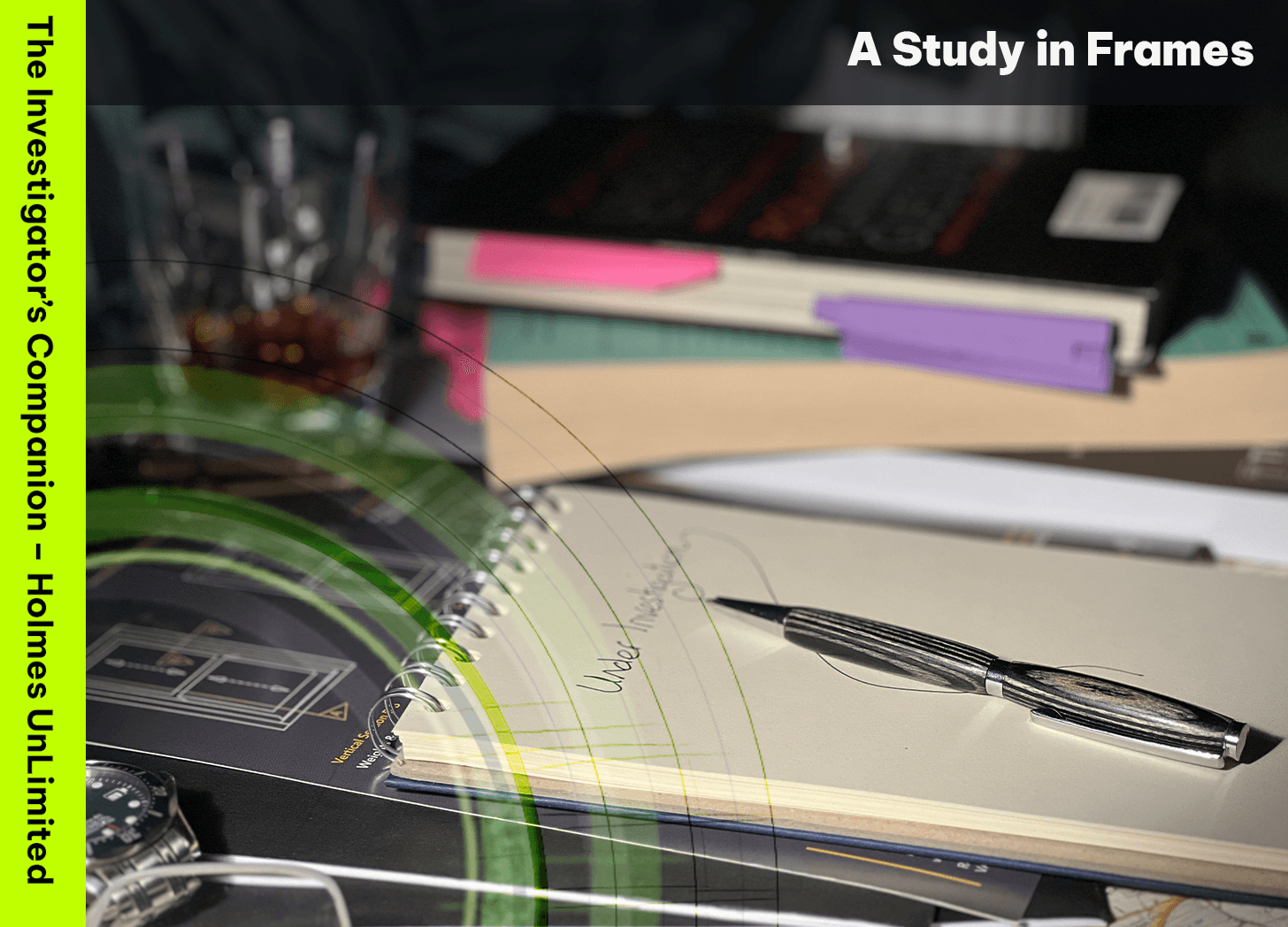
Small clues often reveal the biggest shifts.
This Investigator’s Companion sits alongside the Field Note as a quiet place to pause… not to solve the problem at hand, but to notice how the problem has been shaped. To explore how inherited assumptions quietly guide effort, and how clarity sometimes arrives not through better answers, but through a different frame altogether.
You don’t need to work through this in one sitting. You may find it most useful to return when something feels oddly stuck… not chaotic or broken, but resistant in a way that effort alone doesn’t seem to shift.
Follow the Clue
As you reflect on the Field Note, notice what stayed with you.
Perhaps it was:
the way the founder’s body carried the problem before it was spoken.
the spreadsheet becoming heavier than the building itself.
the moment the question shifted from how to whether.
Look again and identify the single detail that felt most alive - the moment that tugged at your attention without explanation.
If it helps, note this in your Investigator’s Notebook (journal). Not the whole scene… just the detail that feels charged.
Often, the clue is pointing not to the problem… but to the frame holding it in place.
Sit With the Question
Rather than analysing the clue, allow it to rest with you. What question does it raise?
You might find yourself wondering:
What assumption am I currently working inside?
What feels obvious… but has never been examined?
Which option feels unavailable… and why?
There’s no need to resolve these questions yet. If it feels useful, let a few fragments surface in your Notebook.
This stage is about curiosity, not correction.
3. Notice the Pattern
Now widen the lens slightly. Where else does this dynamic show up in your work, your decisions, or your sense of responsibility?
You may begin to notice a familiar pattern:
effort being applied to the wrong problem.
ingenuity strained by an unchallenged premise.
responsibility morphing into obligation.
Name the pattern gently - as a working observation, not a flaw.
Seeing the frame is already a loosening.
Test a Small Shift
Clarity rarely arrives by forcing a solution through the same opening. It often appears when the frame itself is adjusted.
What is one modest investigative step you could take next?
asking, “What if this didn’t need to be solved at all?”
exploring an option you’ve implicitly ruled out.
noticing where duty, identity, or expectation might be defining your frame of reference.
Treat this as an experiment, not a commitment.
Whatever you notice - relief, resistance, surprise - is simply evidence.
Compare Notes (optional)
Some frames are easier to see with company.
If it feels helpful, compare notes with another investigator - a peer, advisor, or trusted friend - and explore:
what each of you assumed was “given” in the situation.
which options felt invisible or illegitimate.
how responsibility and choice are being interpreted.
You’re not looking for advice or reassurance.
Sometimes, a different perspective doesn’t add information, but rather, changes the window.
Holmes UnLimited is where these Field Notes continue… individual investigations into attention, clarity, and the assumptions that quietly shape our thinking.
This isn’t work built for followers.
But if your curiosity pulls you onward, you may choose to follow the investigation here.
Clear the desk.
Shift the frame.
And let the investigation continue.
If this feels like something worth sharing…
You might share this with a fellow investigator - someone who enjoys comparing notes rather than collecting answers.
And if you’d like to stay close to the investigation…
You’re welcome to subscribe to Holmes UnLimited.
New Field Notes arrive from time to time - each an invitation to notice a little more clearly.
Clear the desk.
Quiet the noise.
And let the investigation continue…