Circle Protocols
Investigators Circle Protocols - The Circle Method
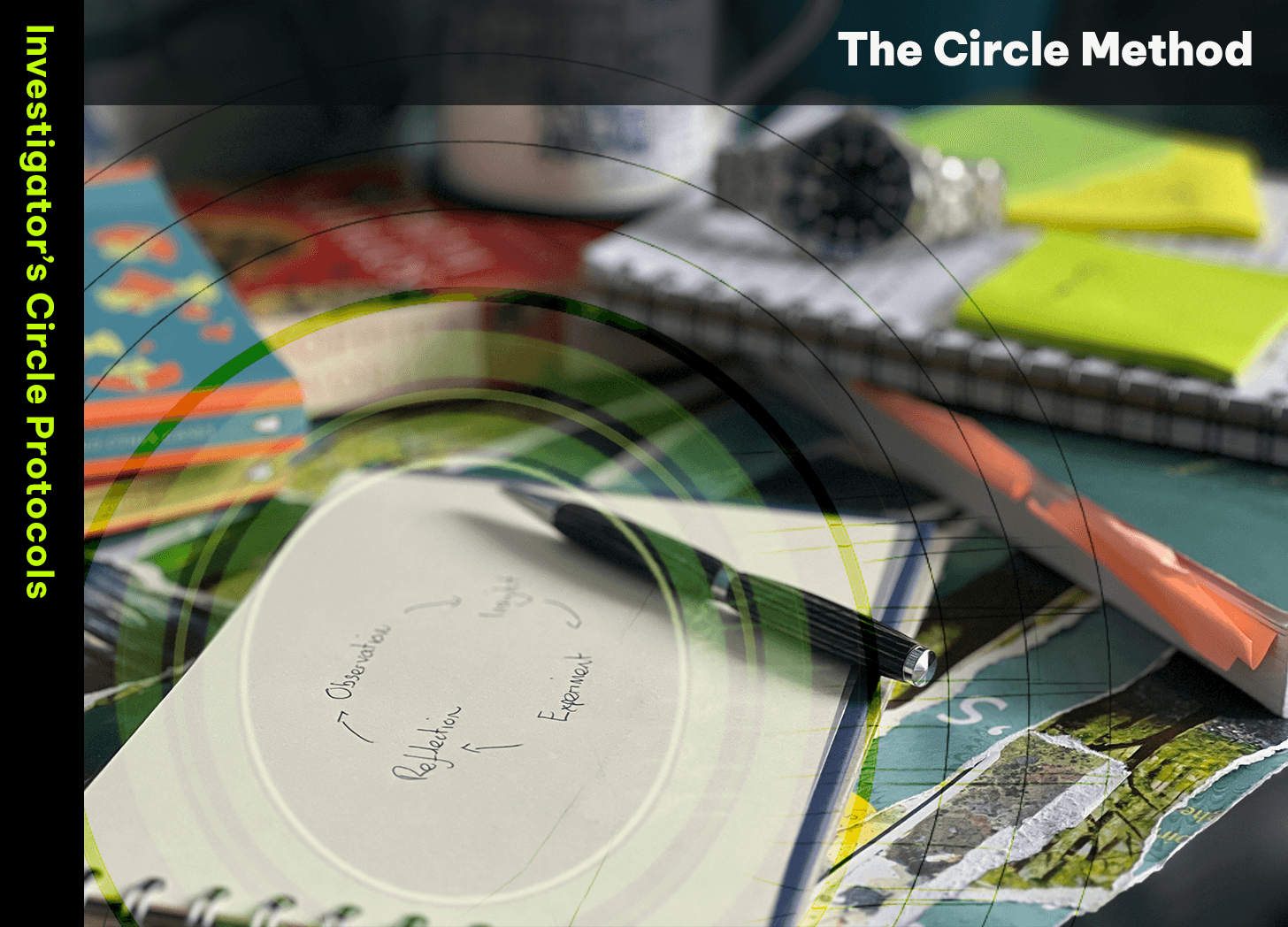
The Circle Method
A way of working together through shared investigation
An Opening Note
Over the years, I’ve had the privilege of facilitating many peer learning groups, founder cohorts, and shared inquiry spaces.
Each one different. Each one revealing something new.
What follows is a simple method that has emerged from that experience.
Not a fixed model. Not a set of rules.
Just a way of working that helps people think more clearly… and move forward with greater intention.
You are welcome to take from it, adapt it, and make it your own.
What Is a Circle?
A Circle is a small group of people who come together to explore real, live questions.
Each person brings a case. Something they are working through. Something that matters.
The purpose is not to advise… or to fix.
It is to look more closely. To ask better questions. And to help one another see a little further.
The Role of the Investigator
In this Circle, we are all Investigators.
We bring a real case - not a polished story.
We stay curious - even when we think we know.
We ask questions before offering answers.
We stay with the question… just a little longer.
The Role of the Facilitator
The role I take in the Circle is a light one.
To hold the space, guide the flow, and protect the quality of the conversation.
Not to provide answers. Not to lead the thinking.
Simply to ensure that the investigation remains… an investigation.
The Flow of a Session
Each session follows a simple rhythm.
One Investigator brings their case.
They share it briefly - enough to understand what is being explored.
The Circle responds with questions, observations, and reflections.
We resist the urge to jump to solutions.
The Investigative Arc
Frame: What is the case?
Observe: What do we know?
Test: What might we try?
Reflect: What has changed?
Session Formats
Some sessions are for movement. Some are for depth. Both matter.
Sessions for Movement: Light-touch sessions where each Investigator shares briefly to maintain momentum.
Sessions for Depth: Slower sessions where one or two cases are explored more fully.
Finding the Balance: There is no fixed formula. What matters is momentum across the group and depth where needed.
Not every case needs depth… but every case needs movement.
A Note for the Facilitator: Notice when energy drops or conversations circle. It can be helpful to pause and return later.
The Guardrails
No 'you should…'
No rushing to solutions
Stay with questions before answers
Allow silence
Speak from observation, not judgement
A Closing Thought
The Circle does not provide answers.
It creates the conditions in which better questions can emerge…
and where those questions are examined from different perspectives.
The work is not to solve everything.
It is to see more clearly… and to take the next step with intention.
If you choose to explore a case of your own, the tools shared here may be helpful.
The Case Sheet: to frame the case clearly
The Question Ladder: to deepen the inquiry
The Observation Loop: to shape how the Circle responds
The Post-Case Reflection: to capture what has shifted
Used together, they form a simple rhythm:
Frame → Explore → Reflect → Continue
Let the investigation continue…
If this feels like something worth sharing…
You might share this with a fellow investigator - someone who enjoys comparing notes rather than collecting answers.
And if you’d like to stay close to the investigation…
You’re welcome to subscribe to Holmes UnLimited.
New Field Notes arrive from time to time - each an invitation to notice a little more clearly.
Clear the desk.
Quiet the noise.
And let the investigation continue…